Pages

Wednesday, February 1, 2012

Fairly Odd Tales

Fairy tales are an important part of our collective heritage. The Frog Prince, Red Riding Hood, Cinderella - these legendary tales provide entertainment, escape and a unity of understanding. They are a shared experience that crosses many cultures and continents.

J. R. R. Tolkien, author of the epic Lord of the Rings trilogy, asserted that fairy tales are supremely suited to, “giving a fleeting glimpse of Joy.” Read his essay, “On Fairy Stories,” for some insight into the origins and use of fairy tales.

Read fairy tales by the brothers Grimm and Hans Christian Anderson with your family. Fairy tale literacy enables your children to take part in the Great Conversation.

Then branch out and have a little fun with some delightfully irreverent books like these, which gleefully spoof the classics.


The Three Little Aliens and the Big Bad Robot
by Margaret McNamara
Schwartz & Wade Books, 2011
ages 3 and up

Three aliens go out into the universe to seek their fortunes and are pursued by a whooshing, beeping giant robot who threatens, “I will crack and smack and whack your house down.”

The dark reaches of our starry solar system provide an eye-catching backdrop for cute green aliens and an impressively fierce robot. Great looking and silly, this book is an out-of-this-world lampoon of the Three Little Pigs.


Falling For Rapunzel
by Leah Wilcox
Puffin, 2003
ages 3 and up

Poor Rapunzel in her tower is having a bad hair day. Her diffuser doesn’t seem to be doing its job, and neither does her maid - clothing and accessories litter the floor and there’s underwear on top of her computer.

A handsome prince hears her whining and calls to her, but confused Rapunzel cannot hear him correctly and instead of letting down her hair, she tosses all sorts of ridiculous items out the tower window.

The rhyming couplets are charming and the acrylic and paper montage illustrations pop with cheery humor. This is a fun Valentine’s Day tale, as it ends with romance and practicality.


The Stinky Cheese Man and Other Fairly Stupid Tales
by Jon Scieszka and Lane Smith
Viking, 1992
ages 6 and up

From title page to end papers, this wacky book is the ultimate example of fairy tales gone berserk. Deranged illustrations and delirious font changes are strong indications that stories such as, “Little Red Running Shorts,” and “Jack’s Bean Problem,” are going to be quite unorthodox and extremely silly.

Theatre IV is putting this one on stage at the Empire Theater from February 17 to March 18, 2012. I haven’t seen it, but director Billy-Christopher Maupin kindly shared a script so I can tell you that it is very much like the book - outlandish and rowdy.

This show is either going to be a blast or a bomb; my guess is that it will be a rollicking good time. The folks at Theatre IV are brimming with talent and their productions are always top-notch. If you saw "A Year With Frog and Toad" over the holiday, then you already know how great Theater IV really is.

A few words of caution before bringing the very young: the show will be confusing if a child isn’t already familiar with the classic fairy tales, and the word “stupid” is used quite a lot. It is always in reference to the tales and not used to insult characters, but still can be strident for those who have taught young children that “stupid” is a bad word. There’s also the use of “flippin’” once, which, let’s face it, is just a substitute bad word. And, be aware that one character is aptly named Cow Patty Boy.


CLASSIC CHOICE

The Practical Princess
by Jay Williams
Parents Magazine Press, 1969
ages 5 and up

Hard to find, but well worth the search, this book is a true gem. When reading it to schoolchildren, I find that boys and girls alike are highly entertained by this story. Even a year later they still tell me, “I really like that princess story.”

The fable seems rather typical at first: a dragon moves in and demands that the princess be sacrificed to him, or he will destroy the kingdom. So now we expect a prince to enter the scene and save the day.

But in this tale, the lovely, graceful and practical Princess Bedelia must save herself with her quick wits. “Use your common sense,” she says, “He’s just asking for me because he’s a snob.” Bedelia has her gaudiest dress stuffed with straw and a hundred pounds of gunpowder, and heaves it down the dragon’s throat. No more dragon problem.

But all is not peaceful in Arapathia, because of Lord Garp of Istven, a crafty, greedy man with a face, “like an old napkin.” He threatens war if Bedelia doesn’t marry him. Princess Bedelia’s clever thinking saves her kingdom and herself, and also rescues Prince Perian from Lord Garp’s evil spell. 

With strange and wonderful pictures by Friso Henstra, this storybook is as good as it gets.


M.D. Clark appreciates the value of Aesop's fables, but finds them frustratingly short and cannot sink her figurative teeth into them.

Sunday, January 1, 2012

Better Late Than Never: Upon Reading "The Phantom Tollbooth" by Norton Juster

Dearest Mr. Norton Juster:

Fifty years is a very long time, is it not? Actually, I can only imagine how it feels because your book, The Phantom Tollbooth (Knopf, 2011), which is celebrating its 50th anniversary, was birthed a few years before I. And that’s where some embarrassment sets in for me. Although the book was always in the library during my growing-up years, and though other kids gave oral reports in elementary school and it was highly recommended by librarians, I never read it until just now.

You see, Mr. Juster, I was a rather persnickety child who literally judged a book by its cover.  True! Certainly, no book was worth reading if it had the word “tollbooth” in the title. My parents drove me through tollbooths twice a day and I knew them to be dirty, congested, panic-inducing (“Look under the floor mats for more change!”) harbingers of tardy slips and detentions. And what's up with that dog/clock thing?

So for years I took a pass on your book. Sorry.

Today, I comprehend the extent of my former foolishness. Why, reading The Phantom Tollbooth reminds me of many wonderful books I’ve enjoyed through the years such as the Book of Nonsense by Edward Lear, John Bunyan’s Pilgrim’s Progress, and Lewis Carroll’s Alice’s Adventures In Wonderland.

And it makes me remember my formerly childish self. Your main character is a boy named Milo who “didn’t know what to do with himself – not just sometimes, but always ... Nothing really interested him – least of all the things that should have.” Well, that’s just like sixth-grade me.

The sighing Milo passes through a mysterious tollbooth and finds himself in a place called Expectations. There he meets the first of many peculiar characters he will encounter.

Mr. Juster, I think you got the idea for some of these idiosyncratic beings from my own family.

In his travels, Milo learns the history of the kingdom of Wisdom and its two great cities: Dictionopolis (the city of words) and Digitopolis (the city of numbers). The princesses Rhyme and Reason kept these two cities in harmony until they were banished, causing Wisdom to fall into disrepair. 

To restore Rhyme and Reason, Milo must jump to Conclusions, swim the Sea of Knowledge and face the forbidding Mountains of Ignorance where dwell demons such as the Threadbare Excuse, the Gross Exaggeration and the Overbearing Know-it-all. An impossible task, yes, but Milo can do it simply because he WILL do it.

Mr. Juster, The Phantom Tollbooth is brilliant and nonsensical, playful and logical. Your frolicsome treatment of conventional idioms leaves me feeling like I am having tea with the Mad Hatter. This “linguistic mayhem,” as you once called it, is utterly delightful to clever children and astute adults alike. What fun!

And you, Mr. Juster, must be an extremely comprehending sort of person to understand that a big pencil is really a magic staff because “once you learn to use it, there’s no end to what you can do.”

Your fable brims with delightful morsels of wisdom and sagacious lessons to be thought about over the journey of a lifetime. I feel a little younger and a little smarter, too, for having read your book.

Happy 50th anniversary, Milo, Humbug and Tock! Sorry I’m so late in coming to the party.

Your newest fan,

M. D. Clark


P. S.  Mr. Juster, your new picture book for kids ages 4-8, Neville (Schwartz & Wade, 2011) is marvelous, too. The mixed media illustrations by G. Brian Karas perfectly capture the changing emotional tone of your story.

It opens on a lonely boy in a colorless neighborhood. His back is to the reader and he gazes into nothingness as a moving van leaves the scene. Lonely and sad, the boy walks a little way then takes a deep breath and shouts the name “Neville” into the air. Shortly another boy joins him and advises him to shout louder because “he probably can’t hear you.” They shout together. More children join them and take up the call.

With each child comes a little more color and life doesn’t look so bad anymore for this young man. The charming ending came as a complete surprise to my youngest son. Now he’s a Juster fan, too.


CLASSIC CHOICE

Juster’s Phantom Tollbooth reminded me of several classics that you might enjoy, some of which were mentioned above. Another timeless book for the whole family is The Little Prince (Harcourt, 1943), by Antoine De Saint-Exupery.

Saint-Exupery’s classic story is another book that grows with the reader. A child hearing the story will have a very different impression than a teen reader, and an adult’s understanding will be different still.

A narrator recalls the events of six years before when he, a pilot, was stranded in the desert. He wakes to find a surprising little boy standing before him, asking for a drawing of a sheep. This little prince from asteroid B-612 finds the ways of grown-ups to be very strange, for grown-ups, it seems, tend to be rather selfish, narrow-minded and lacking in imagination.

The bittersweet parable was written in French. Katherine Woods’ translation has been the standard in English until recently, and it may be difficult to get a copy, but it is worth the try. Richard Howard’s omnipresent new translation from 2000 is adequate, but lacking the lyrical tenderness of Woods’ work.

Thursday, December 1, 2011

Something for Everyone on Your List

  
Do you find yourself wondering what will be the perfect gift for friends and family this Christmas? Why, a book, of course!

Just for you, I’m revealing my top-secret gift list. These books deserve a bookmark because I know our family will get a lot of mileage out of them; they will be read many times by the recipients and traded around among siblings and friends.  Though I have categorized each book for a specific child, they really aren't limited to that particular age or gender.

 For the baby:

Rescue: Pop-up Emergency Vehicles 
and 
Puppies, Kittens and Other Pop-up Pets 
by Matthew Reinhart
Robin Corey Books, 2011

Matthew Reinhart is the creator of extraordinary works of pop-up art, including, “Star Wars: The Pop-up Guide to the Galaxy,” and the “Encyclopedia Mythologica” trilogy.  They are intricately made for careful hands and are too expensive to give to your youngest readers for fear of damage.

Now Reinhart has produced two books for the wee ones. The friendly pop-up spreads, moving pictures and flaps that open are a delight to young eyes. They’re far sturdier than expected and reasonably priced so you don’t cringe over their inevitable demise.


For the 7-year-old boy:

Mameshiba: On the Loose! 
by James Turner 
VIZ Media, 2011

Cute and colorful, the trivia-loving Japanese “bean dog” characters in this graphic novel have a droll sense of humor. Led by brave Edamame, these intrepid legumes are off on two eccentric adventures: facing mutant sewer chickens (“terrifying monsters made of living sewage and discarded chicken parts. Plus a secret blend of herbs and spices.”), and exploring the far reaches of outer space.

Though it looks like a kiddie comic, the humor is sophisticated enough for a wide audience.


Learning to Ski with Mr. Magee
by Chris Van Dusen
Chronicle Books, 2010

Mr. Magee and his happy dog, Dee,
Star in this riotous story about learning to ski.
It’s written in couplets that cleverly rhyme,
And make reading aloud a jolly good time.
The pictures are funny, the story preposterous,
You’ll laugh so hard you may hurt your esophagus.


For the 9-year-old boy:

The Secret Science Alliance and the Copycat Crook 
by Eleanor Davis 
Bloomsbury, 2009

Ultra nerd Julian Calendar has a plan to fit in at his new school. He’s trying to hide his super smarts to fit in with the cool and sporty crowd. When Julian fails to disguise his scientific brain in front of his class, he isn’t vilified. Instead, the “dumb jock” and the “dangerous maniac” let him in on their own big secret – they’re nuts about science, too. Together they form the Secret Science Alliance, soon finding themselves in a battle with the evil, invention-notebook-stealing Dr. Stringer.

Eleanor Davis has created a fun graphic novel with a lively story and incredibly detailed drawings. She breaks down stereotypes and celebrates talented young minds without a hint of sermonizing. The book is so entertaining, kids will wish for more SSA adventures.


Howtoons: The Possibilities are Endless 
by Saul Griffith, Nick Dragotta and Joost Bonsen 
Collins, 2007

This handy comic book opens with mom’s classic query, “Can’t you kids make something other than trouble?”  That’s when friends Tucker and Celine create their own workshop and go to town on some great building projects.

For the cub scout who loves to use tools, this is a great gift. The book illustrates, in comic book style, step-by-step instructions for making a marshmallow shooter, a rope swing, a simple electric motor and more. Also included are lessons in safety and the proper use of tools. The projects vary in degree of difficulty. Supervision is recommended, of course.


For the 11-year-old girl:

Zita the Spacegirl 
by Ben Hatke 
First Second, 2011

Zita and Joseph happen upon a meteoroid crater containing a device with a large red button. Though Joseph warns her not to, Zita pushes the button and, suddenly, Joseph is sucked into a vortex and disappears. Zita is horrified and can think of nothing to do except run away in fear, but guilt and worry eventually lead her back to the jumpgate and she summons the courage to follow her friend.

Clean design and a muted color palate make this graphic novel easy to follow and a pleasure to read.  Ben Hatke has created an outer space adventure with elements that may remind you of sci-fi movies you’ve seen; that slightly familiar feeling makes Zita’s unique quest seem plausible. Zita and her companions exemplify the virtues of courage, loyalty and self-sacrifice. Readers will cheer for them.


The Last Dragon 
by Jane Yolen
Dark Horse Books, 2011


The bewitching illustrations in this fairytale graphic novel will surprise you. Yes, this is another village-versus-dragon story, but it is intelligently revisited and, as it turns out, is a compelling story.

The healer’s daughter and a heroic-looking young man must use the seemingly small talents they possess to deal with the very large problem of a dragon. Though tempted to run away from their predicament, they choose the road less traveled and prepare for battle. But even with the villagers’ help, how can they possibly win?

This romantic adventure has great presentation; the larger-sized hardbound tome feels somehow ancient and otherworldly.  

For the cousins and friends:

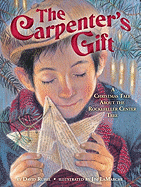
The Carpenter’s Gift: A Christmas Tale About the Rockefeller Center Tree, by David Rubel (Random House, 2011). 

I am always reluctant to read new holiday stories because they are so often disappointing, but this simple story gets my Bookmark. Sentimental without the sap, this story follows young Henry and his father who borrow a truck to sell Christmas trees in Manhattan where men, grateful to have work, are building Rockefeller Center. It is 1931 and times are hard.

“The best presents are the ones you don’t expect,” thinks Henry. Indeed, there are many unexpected magical moments in this lovely story. The spirit of Christmas shines so brightly readers may be tempted to think it a true story. Warm illustrations sparkle with the love of family and glow with the joy of giving.

Rubel’s book is a gift that will be enjoyed year after year.


M. D. Clark’s family never misses the youth Christmas show at the Swift Creek Mill Theater. See ya there!   
http://www.swiftcreekmill.com

Tuesday, November 1, 2011

Heroes From History

Last month, I wrote about how important it is that children read and listen to stories of heroes and I offered a couple of suggestions in the fiction genre.  This month, let us take a look at a few examples of recently published historical fiction and nonfiction children’s books.  These selections, which center on real heroes from the United States’ storied past, are worthy of a bookmark.

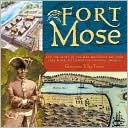
We’ll begin in colonial America with Francisco Menendez, who was born in West Africa, brought to Charles Town, South Carolina as a slave, and who helped found the first free black frontier community.  A new book, Fort Mose, by Glennette Tilley Turner (Abrams, 2010), tells his story and reveals this important piece of early American history.

Located in St. Augustine, Florida, Fort Mose was “the early, southern destination of the resistance movement that would later become known as the Underground Railroad.” The free Africans, Native Americans and Spaniards at Fort Mose declared allegiance to the King of Spain and the Catholic Church. From its founding in 1565, there were numerous skirmishes with British colonists. Fort Mose was abandoned in 1763 when Florida became a British colony.

Turner’s expository retelling of the history of Fort Mose is more textbook than storybook, but it is engaging. Utilizing photographs, illustrations and letters, Turner speculates about what life was like for Francisco Mendez. What is known for certain is that Mendez distinguished himself as an intelligent, courageous leader. In his own words, he asked that he be remembered for the “loyalty, zeal, and love I have always demonstrated in the royal service, in the encounters with the enemies, as well as in the effort and care which I have worked…”

This book is the result of the author’s lament that rarely does a history book or teacher mention the story of Fort Mose. It is an informative addition to any classroom library.

Elementary school children looking for a civil war-era biography will enjoy reading John Brown: His Fight for Freedom, by John Hendrix (Abrams, 2009). With bold illustrations and a sense of urgency in the text, Hendrix hurls young readers into the middle of John Brown’s passionate fight for the abolition of slavery and his attack on Harpers Ferry in 1859. 

The larger-than-life illustrations of John Brown, Harriet Tubman and others give this book the look and feel of folk legend. Hendrix’ word choices enhance this romanticized sense and create excitement.

Hendrix takes a little literary license, noting “some events, conversations, and compositional staging have been reimagined to make them more appealing,” but he captures the fighting spirit of this controversial figure in the hopes of spurring interest in further study of the life of John Brown.

Hendrix also lends his energetic illustrative style to another engrossing historical picture book, this time written by Marisa Moss: Nurse, Soldier, Spy: The Story of Sarah Edmonds, A Civil War Hero (Abrams, 2011).  It is the story of a young woman who disguised herself as a man so she could fight in the Civil War.

Moss captures the free-spirited nature of nineteen-year-old Sarah who signed the name “Frank Thompson” when she joined the union army. The excitement builds when Sarah is asked to infiltrate a Confederate camp disguised as a slave.

The author’s note in the back of the book supplies details that were left out due to constraints of length and artistry. Young readers often skip over such things, but it would be a mistake here. Moss ends her exciting tale just as Sarah returns to the Union camp to report what she has learned from spying. You have to read the note to find out the rest of her story.

Marissa Moss pairs up with illustrator Andrea U’Ren for a picture book based on the true story of Ida Lewis in The Bravest Woman In America (Tricycle, 2011). This tale can be enjoyed and understood by children as young as five, and it is also appealing to children who are much older.

Born in 1842, Ida Lewis was an exuberant girl whose father taught her to row a boat and tend the lighthouse at Lime Rock. When her father grew ill, sixteen-year-old Ida took over his job watching the harbor and rescued a group of boys whose boat overturned in the choppy sea.

U’Ren uses watercolor, ink and acrylic in warm tones to capture the duality of the joyful and tormenting seas. She captures fierce determination in Ida’s face in her rendering of Ida rowing to Lime Rock. On the last page, an arresting image of a smiling girl jauntily wearing her father’s captain’s hat educes confidence and pride resulting from a job well done.

“The Bravest Woman In America” is a hero story worthy of any youngster’s bookshelf.


Our final selection this month is Battle of Nashville, by Benson Bobrick (Knopf, 2010). This book is a serious study of the Civil War and of the personalities who shaped it. It gives readers ages ten and up a fascinating look at the heroes of American history.

Though it looks a bit daunting, like a high school text, the book is written with a sensitivity and insight that is more like poetry. Instead of a mere recitation of facts, Bobrick reveals the deeply personal side of battle, revealing the humanity of the generals and soldiers who are embroiled in war. Adding to the drama are extraordinary photographs: the Capitol dome under construction; a horse-drawn hospital carriage gathering up the wounded; and Union soldiers sitting astride a 300-pounder Parrott rifle, it’s muzzle shattered.

Accessible enough for middle readers to read alone, and exciting when read aloud together, “Battle of Nashville” is one to bookmark.


 Happy reading!


Monday, October 17, 2011

Why Hero Stories?

Hero stories are an important part of every child’s upbringing. Wonderful examples of courageous, patriotic and self-sacrificing heroes can be found in myth, fable, fantasy, history and biography. Such stories help children learn to live virtuous lives. They expand the heart and the imagination, and can engage young people in conversations about greatness and humility.

The two novels featured here are the debuts of two fantasy-adventure series for middle readers. Each offers engaging stories and characters that provide both great entertainment and lessons in justice, prudence and fortitude.

The Lost Hero
by Rick Riordan
Hyperion Books, 2010

Rick Riordan, acclaimed author of the Percy Jackson & The Olympians chronicles, continues to excite his loyal fans with his new Heroes of Olympus series.  And mythology has never been so cool.

“The Lost Hero,” the first book in the Heroes of Olympus series, is a spin-off from the five-volume Percy Jackson stories. Folks who haven’t yet read Percy’s adventures can enjoy this story just as much as those in the know, but will likely wish to go back and read Riordan’s earlier work because “The Lost Hero” is just so darn fun to read.

In the opening of the story, Jason wakes up in the middle of a Wilderness School field trip to the Grand Canyon not knowing who he is or how he got there. Someone named Piper is holding his hand and claiming to be his girlfriend. A stranger called Leo says he’s Jason’s best friend. Is this for real, or are these two just as disconcerted as Jason? There is no time to ask questions because suddenly the three teens and their teacher, Coach Hedge, are under violent attack.

Annabeth, a character from the Percy Jackson series, arrives in a chariot drawn by winged horses. She takes Jason and his companions to Camp Half-Blood where they begin to learn who they are: demigods, half god and half mortal. Annabeth explains why the kids at this odd summer camp have had a hard time in school:

Most of us are diagnosed with attention deficit disorder or dyslexia or both … It’s because we’re hardwired for battle. Restless, impulsive – we don’t fit in with the regular kids.

Together, the trio must battle storm spirits, Cyclopes, dragons and the gods themselves, while also wrestling with their personal demons – Jason’s inability to remember his past, Leo’s feelings of guilt and inadequacy, and Piper’s desperate desire to save her father - which tempt them away from virtue and threaten to destroy them.

Riordan weaves an enigmatic story where there are more questions than answers. Readers do not get frustrated, though, because the pacing is quick and the battle scenes are intense and frequent. Each main character has a distinctive and complex inner life which makes him seem real and recognizable, reminding readers of people they might know at school.

“The Lost Hero” is an exciting book and is hard to walk away from when homework beckons. Look for volume two, “The Son of Neptune,” which is being released this month.


Hero
by Mike Lupica
Philomel, 2010

Zach Harriman, 14, appears to be like a lot of kids his age. He does well in school, likes the Knicks and loves his parents. He just happens to have a famous dad whose job as a “troubleshooting diplomat” for the president keeps him away from Zach more than either of them would like.

Any kid wanted to have a dad who was brave and respected and famous, no doubt. And a hero, throw that in, too. Yet more than anything, Zach just wanted his dad to be home.

Life changes quickly when his father dies under mysterious circumstances. Zach begins to discover that he has special powers, that his dad also had superhuman powers, and that “the Bads” are real and are now targeting him. Zach must take on the role of hero in order to save from harm those he cares about.

“All of my books are about kids getting knocked down and then showing readers what they are made of by getting back up,” says Mike Lupica in an interview for the Chicago Tribune.

This book has everything that appeals to a young reader: action, suspense, family ties, politics and sports.  Some readers may find it a little frustrating because the book is truly just the opening of a saga that will play out in future books in the series. There are a lot of questions the reader is left to ponder, and there is much anticipation created for future installments.  Most readers, however, will enjoy the suspense and will eagerly await a second volume.


Classic Choice

Don't be turned off by the creepy new cover.
The Magician’s Nephew
by C. S. Lewis
HarperCollins, 1955

If you haven’t read this, or the other Chronicles of Narnia, you are missing out on one of the greatest series of hero stories in children’s literature.

This book is the prequel to “The Lion, The Witch and The Wardrobe,” and it tells how Aslan created Narnia and how evil came to threaten it.

It is the story of Digory and Polly, two friends who are bored with life London one cold, wet summer at the turn of the century. There is nothing out of the ordinary about the two children: they are not descended of gods; they have no special powers. Yet when placed in extraordinary circumstances, these children must rely on the virtues they have been brought up with in order to correct their mistakes and face down evil in this grand adventure that takes them far from home.

Digory’s Uncle Andrew is an antihero -- self-serving and cowardly -- who has been dabbling in magic and has created a set of rings that will transport anyone who touches them to a “Wood between the Worlds” – a gateway to places beyond our universe. He tricks Polly into taking a ring and she instantly vanishes. It is then up to Digory to summon the courage to go after her, and when he does so, the children end up exploring places they couldn’t have imagined.

In a terrible world called Charn, Digory lets curiosity get the best of him and awakens an evil witch who is then loosed upon the newly created, innocent world of Narnia. He is given a quest to atone for this mistake. It is Digory's courage and his ability to overcome temptation that transports them home and there saves the life of his ailing mother.

Great heroes abound in the Chronicles of Narnia.


M. D. Clark wishes she could write stories like the three authors featured here. But because she cannot, she appreciates their talent so much the more.

Saturday, September 17, 2011

Picture These Books on Your Shelf

Many truly enchanting picture books have crossed my desk in the last few months.  These wonderfully illustrated selections are ripe for reading as summer comes to an end.

Pretend 
By Jenifer Plecas
Philomel, 2011
Ages 3-7

“Pretend,” Jimmy said to Dad, “that this couch is a big boat, and that we’re floating in the ocean.”

Jimmy and his dad have “the best time ever” when Jimmy’s imagination leads them through shark-infested waters to a deserted island, turning an ordinary afternoon into an extraordinary adventure.

The story begins when Jimmy and his eager dog hop aboard the sofa and toss Dad’s magazine overboard in a not-so subtle demand for him to join the game. Dad soon catches on after Jimmy coaches him to say, “Oh no, what are we going to do?”

When their imaginations get going, the dog’s leash becomes a fishing line, the staircase a mountain, and blankets and chairs become a cozy fort where the tired explorers can stretch out and rest.

Plecas’ winsome art in ink and watercolor pulls young readers right into the fantasy game. Her clean, uncomplicated illustrations still allow for fun details like grinning fish, toothy sharks, and that merry puppy. Dad’s facial expressions are priceless as he vacillates between slight annoyance and genuine amusement.

The book feels familiar and yet unique.  It reminds me of the times I pretended that the floor was hot lava and my siblings and I had to walk on furniture, pillows, and record albums to get safely from the den to the kitchen. Today, my children like to imagine our family room as a swamp filled with alligators.

Read this with your children and watch what it will inspire you to do!


A Ball For Daisy 
By Chris Raschka
Schwartz & Wade Books, 2011
Ages 3-7

The slightly messy watercolor illustrations in a comic book style progression didn’t appeal to me at first glance, but I handed this book over to my six-year-old son and he loved it immediately. My son took delight in the very doggy antics of Daisy as she romped over the pages of the book chasing her big red ball, sleeping with it, and taking it to the park.  He “awww”ed and grinned as he “read” each picture in the wordless book to me, easily communicating the story and making me an admirer, too.

Inside this elementary story are the sophisticated feelings of joy, loss, sorrow, comfort, friendship and redemption. How does an illustrator manage to put all that into a 32-page book without words? Credit the messy magic of Chris Raschka.


Lady Bug Girl and the Bug Squad 
By David Soman and Jacky Davis
Dial, 2011
Ages 3-7

This eye-catching book is a standout at the library or bookstore. David Soman’s artistic talents capture the enthusiasm and innocence of childhood to create a unique and recognizable look for the “Ladybug Girl” book series

Crisp drawings, vivid colors and attention to detail are the hallmarks of this series. Soman has a terrific sense of perspective that he employs in creating an emotional landscape of freshness and innocence, adding so much enjoyment to these straightforward tales of tender youthfulness.

In this latest book, our plucky friend Lulu (aka Ladybug Girl) hosts a playdate with her special friends, the Bug Squad. It is a day for costumes, craft projects, and follow-the-leader, where everything is perfect until a misunderstanding at snack time.

Lulu’s stomach feels funny. She didn’t mean to hurt Kiki’s feelings. She’d never want to do that in a million years. It’s just that she was having so much fun that she didn’t think twice when she blew out Kiki’s candle. Lulu just wanted things to be the way she had imagined them.

Luckily, Ladybug Girl is brave enough to say she is sorry.

There’s no leaping over tall buildings in this series, no extraordinary heroics; just the personal courage required of a youngster in the everyday trials of growing up. And that is great courage, indeed.


Classic Choice

Swimmy
By Leo Lionni
Dragonfly Books, 1963
Ages 4-8

A simple story that has stood the test of time due to a brave hero, a clever solution to the conflict, and illustrations of ocean life that beg to be imitated.

Swimmy is a little black fish in a school of little red fish who must be careful, or else the big fish will eat them. But Swimmy has seen the enchanting variety of the sea and he wants the red fish to, “go and swim and play and SEE things!”

Were I an art teacher, I would share this story with a group of first graders and then set them to work with watercolors, sponges, doilies, and fish shaped stamps cut from foam to see if we might be able to create a beautiful ocean for Swimmy.  What fun we would have, mixing colors for strange fish and sea anemones floating on a rippled background of blue - just as I imagine Leo Lionni must have done in creating this magical story.

Readers must slow down and savor each page, because this one is over before you know it.  That quality also makes it a great selection for tired parents who want to read a quick story before tucking in the little ones for the night.


M. D. Clark happily relinquishes ¾ of her brood back to guidance of the wonderful teachers at their grammar school.  She grows weary of the heat, and can be found hiding in the shade of a good book.   

Wednesday, August 17, 2011

Not ALL Reading is Good Reading

If your children are enrolled in a local school, no doubt you have become familiar with the annual summer required reading list. Whether your child eagerly embraces these literary suggestions or roils at the thought of homework on vacation, you will want to take time to familiarize yourself with the titles proffered so that you can help your child select books which best suit him.

A good reading list will include a variety of books -fiction and nonfiction, classics and new titles - and you will recognize a few right away. It will contain suggestions for books on grade-level and also offer a selection for more advanced readers.

Not all summer reading lists are of equal value. For instance, the 2010 Richmond Public Schools reading list contained no classic literature at all. None of the suggested books was more than four years old. Of course it is wonderful to read current authors, but an educational institution has a responsibility to introduce students our great literary heritage.

Likewise, parents have a job to do: they must look carefully at the kinds of books that schools are promoting. A quick perusal and some Google searching will give parents an idea of whether or not a text is appropriate to his child’s reading level, the story is engaging, and the subject matter is of value. Just a short discussion will tell if the child comprehends the story and enjoys it.

Enjoyment is key. Reading is a lifetime skill that provides information and entertainment. With so little time being devoted to reading nowadays, it would be irresponsible for parents to let a child get bogged down in worthless stories that don’t engage him. Instead, parents must help him choose books from his recommended reading list that appeal to his interests while guiding his moral development according to the family’s values.

This is very important. What we choose to entertain ourselves with has a vivid impact on our character.  Stories can lift our spirits or drag us down into darkness. Parents should be very wary of librarians and teachers who insist that ANY reading is good reading. This is absolutely not true. These days, there is much in print which is dysfunctional, violent and perverse. 

Meghan Cox Gurdon brought this trend of depravity to the foreground in her June 4th,  2011 book review for The Wall Street Journal. Her essay, “Darkness Too Visible,” points out vivid examples of the grotesque, of shocking plots where every character is either a victim or perpetrator of unspeakable violence, currently found in young adult novels.

Gurdon caused an uproar in the publishing community by daring to point out the plain fact that teen novels are growing more and more lurid. Members of the American Library Association, Publishers Weekly, authors and book reviewers have vilified her for it, calling names and accusing her of being a danger to …well, what? Indecency? The loudest protests have come from those who insist that adolescence is hell and such books are somehow therapeutic.

Librarians insist that dark books with objectionable subjects are merely providing families with “teachable moments,” forgetting that teens rarely read stories with mom and dad anymore. Parents are falling for this line of twisted logic because it is pervasive.  Entertainment Weekly (June 17) ran a piece about Jay Asher’s teen suicide novel, “Thirteen Reasons,” with a headline that boasted “... This Guy’s Mystery Novel is Saving Teen Lives."  Those who imagine lifesaving aspects in these distorted portrayals of teen life refuse to admit that such a book could also have serious negative consequences for a reader.

Stories with twisted values - where meanness rules, and parents have abdicated their roles - are not limited to the young adult genre. These corruptions of innocence are seeping into books for middle readers as well.

Jeff Kinney, author of the hugely popular “Diary of a Wimpy Kid” series admits to Parade Magazine’s David Browne in a March 20, 2011 article that his main character, Greg, is no role model. Browne describes Greg as “a proud slacker,” who is “whiny,” and “self-absorbed.” The article also tries to advance the notion that any reading is good reading, and that disrespect, bullying and foul language in books don’t really matter.

Parental alarm bells should sound when a librarian such as the one mentioned by Parade rationalizes, “It’s not like we’re endorsing the bad behavior in the books.” And red flags should go up when Kinney claims controversial author Judy Blume’s titles to be “the gold standard for children’s fiction.”

It shouldn’t surprise that these books are sneaking onto summer reading lists coming home from schools.

So look carefully. You have the right to demand from your schools worthy books for required reading. You also have the responsibility to choose well when faced with a list of suggestions. Yes, it is difficult, and not everyone is on your side. But if you do your homework well, you and your child will benefit from the pleasure of sharing a really good book.

M.D. Clark recommends that you read Meghan Cox Gurdon's article. Click here or go to the Wall Street Journal website.

Sunday, July 17, 2011

Gifts for Baby

A thoughtful addition to a child’s personal library can have lasting influence. The best books are never outgrown.

There is no need for high-tech gadgets or books with buttons that emit electronic noise; all books for children ages 0-3 are truly “interactive.” By using a howly-growly voice, or a tiny whisper, the reader sets the tone of the book and brings it to life. Pointing to illustrations can jump-start giggly moments and great conversations. An enthusiastic reader will easily demonstrate to a child that books are to be jumped into full-force and savored for the imaginative interplay they inspire.

Reading to the very young is so much fun. Not only does it foster sweet moments together, it effortlessly teaches the child lasting skills in reading comprehension. Later, when he is able to read quietly alone, the child’s own imagination will fill his five senses with story.


No NO Yes YES 
by Leslie Patricelli
Candlewick Press, 2008
Ages 1-4

There aren’t any words beyond “no” and “yes” in this book, but it inspires endless giggles and lots of discussion. 

Illustrated in bold acrylics, an adorable one-haired, diaper-clad baby is the star of Leslie Patricelli’s board books. Baby presents opposites on facing pages: on the left, baby is tasting food from the confused dog’s bowl and the text says “No NO; on the right, baby eats a banana while the dog enjoys his meal and we read, “Yes YES”.

Other titles such as “Baby HAPPY Baby SAD” and “Yummy YUCKY” are lots of fun to read. Patricelli’s sassy and sweet baby smiles and frowns in turn with the lesson he is learning on each simple page.


Fluffy Chick and Friends
Priddy Books, 2005
ages 0-2
Cloth books are appealing for pre-readers because they appeal to so many senses. They can be chewed, slept on, and impatiently dashed to the ground with little consequence. Little fingers can easily grip the book and turn the pages.

This book uses colors, contrast, texture and sound to the fullest. Its poly/cotton pages present recognizable farm animals each having a unique touch-and-feel feature. The first page has a crinkly layer in the batting to provide interesting sound, and the rhyming text is light and rhythmic.

Various Titles 
Golden Baby
Random House, 2011
Ages 0-4

New this year, Little Golden Books are being published in a padded board book format for babies. Called the Golden Baby line, the new series has released four classic stories: “The Pokey Little Puppy,” by Janette Sebring Lowrey; “Baby’s First Book,” and “Baby Farm Animals,” by Garth Williams; and “Home for a Bunny,” by Margaret Wise Brown.

Though you may miss the gold foil spine, still the Golden Baby books are chunky for the littlest hands to hold on to and sturdy enough to take in the car and on the go.


Busy Elephants
by John Schindel and Martin Harvey
Tricycle Press, 2011
Ages 1-3

This book is wonderful for children because it has amazing photographs of elephants in their natural habitat doing the things that elephants naturally do.  Children will delight at these creatures running through mud and splashing in a river with ears outspread. There are great close-ups of wrinkled elephant feet, trunks and skin. Also, the book makes use of terrific verbs to widen budding vocabularies.

There are thirteen more books in Tricycle’s “Busy Book” series. Each book features one animal species magnificently photographed in full-color. These books are a nice first introduction to nonfiction reading.


Classic Choice

Any book by Sandra Boynton

Of all the books available for reading to toddlers, my husband has always preferred sharing those written and illustrated by Sandra Boynton with our children. Glancing at her website (www.sandraboynton.com), I have found that this prolific author/illustrator/songwriter has created a LOT more books than even I knew about.

My husband’s favorites are oldies but goodies: “Doggies” (Little Simon, 1984) – which will have you barking up a storm and learning to count, too; and “Horns To Toes,” (Little Simon, 1984) – a catchy parts-of-the-body rhyme that invites lots of tickles.  The children never grow tired of the plucky illustrations or the delightful text.

Boynton’s new books are great, too. My older children have especially enjoyed “Your Personal Penguin” (Workman Publishing, 2006) since we first discovered the catchy song version sung by Davey Jones of The Monkees (www.workman.com/boynton). At the time, we were enjoying the bovine humor from a recent volume for the older set, “Amazing Cows: Udder Absurdity for Children” (Workman, 2010) which is filled with poems, jokes and cow comics, all in Boynton’s signature style.

Sandra Boynton’s nifty creations are whimsical and pure fun.


M. D. Clark has four children (ages 0 to 11 years) and more books than she has room for.

Friday, June 17, 2011

Books for Teens: "The Running Dream," by Wendelin Van Draanen; "Orchards," by Holly Thompson; "My Life, The Theater, and Other Tragedies," byAllen Zadoff; and "Jersey Tomatoes are the Best," by Maria Padian

Trying to steer your children away from young adult books about vampires, sex and adolescent self-obsession? There are worthy new novels out there if you take the time to look.

My life is over. These stark words begin Wendelin Van Draanen’s book, The Running Dream (Knopf, 2011). Jessica, 16, was a rising star on the school track team when a car accident takes the life of a teammate and Jessica’s leg.

Amazing friend Fiona won’t let Jessica wallow in self-pity. She is a driving force in getting Jessica back in to high school life. And Jessica’s eyes are slowly opened to the complexities of life around her.  She looks beyond herself to see the emotional and financial struggles her family faces and she learns to look past infirmity in a fellow student with cerebral palsy, recognizing her as a person and a friend.

This is no fairy tale; the handsome, popular guy does not take Jessica to the prom. But it’s a wonderful story of triumph in terrible adversity. Jessica’s emotional journey makes this book enjoyable and worthwhile reading.

***

When a fellow student takes her own life, Kana Goldberg has to face up to her own weaknesses and her less than exemplary treatment of others.

Orchards by Holly Thompson (Delacorte Press, 2011), is a sensitive rendering of Kana’s struggle to face the suicide of a friend, although she would prefer to forget. She is sent to live with her extended family in the fascinating landscape of rural Japan to help her discover who she is and who she will become.

Written in free verse, Thompson’s economy of words brings out the emotional essence of Kana’s experience. Gently woven into the story is an indictment of teens who prefer to float through life following the group dynamic, intentionally unaware of the feelings of others.  Kana’s maturation and redemption blossom from the ancient ceremonies of her Japanese heritage and from her determination to hope for the future.


***


In Allen Zadoff’s novel My Life, the Theater, and Other Tragedies (Egmont, 2011), high school sophomore Adam Ziegler must decide: do you follow the arbitrary rules that go along with the “cold war” politics waged between actors and techies, or do you follow your heart?

Adam’s friend Reach explains why the two theater groups don’t mix:

We do not find actors interesting, because they are not interesting. They are boring. They are good to look at, yes. I cannot deny that. They have been genetically selected to be good looking. Like a butterfly. A butterfly is a lovely thing, but when it comes to brain surgery, you do not want a butterfly scrubbing in. You want a doctor. You want skill set.

Adam exists behind the spotlight on the catwalk of the school theater. The remote vantage point provides protection and a sense of place for a young man still dealing with the sudden death of his father.  But that world is forced to expand when he develops a crush on Summer, a spunky actor who shines onstage and off.

Against the backdrop of Shakespeare’s “A Midsummer Night’s Dream,” Zadoff’’s relatable characters are finding their way while dealing with cliques, stereotypes and the pageantry of high school

***

Best friends Henriette and Eva are talented individuals in their chosen pursuits – Henry (as she is nicknamed) could become a major contender in the tennis world; Eva pursues excellence as a ballet dancer. They spend the summer following their dreams in Jersey Tomatoes Are the Best, by Maria Padian (Kopf, 2011).

Henry finds success and romance at tennis camp in Florida, but in New York, Eva begins to self-destruct when anorexia takes control of her thoughts. Pressures from parents, coaches and from the girls’ own expectations for themselves combine to force Henry and Eva to make serious choices about their goals, careers, and their friendship.

Padian writes this story with each character narrating alternating chapters. This double first-person technique gives the reader insight into the complex inner life of both characters, but it slows the narrative while readers get accustomed to the style.  Nevertheless, the story is absorbing and the reader will find Henry and Eva to be engaging and authentic.


Classic Choice

Emma 
Jane Austen

Why should one encourage youth to read the novels of Jane Austen? The reasons are so numerous that entire books have been written on the subject. If you are interested in such books, I recommend Susannah Carson’s collection of essays, A Truth Universally Acknowledged: 33 Great Writers on Why We Read Jane Austen (Random House, 2009). But for those whose interests are less scholarly, we read Austen because her prose is charming and witty, her characters are gracious and intelligent, and her stories are romantic and moral.

In Austen’s Emma, the endearing Emma Woodhouse takes it upon herself to play matchmaker among her acquaintances – often with disastrous results. Emma is an independent and imperfect girl who has a lot to learn about romance and reality.

It takes effort for modern teens to read Austen. The English Regency period customs and language may seem quite foreign at first. But those who persevere will find that they are greatly rewarded with timeless lessons about love, hope, despair, and moral character.